SEO for Small Business: A Foundational Guide for 2026

Small businesses rarely have the luxury of a six-figure marketing budget or a dedicated SEO team. What they do have is proximity to their customers, the ability to move fast, and a lot to gain from search visibility. Done right, SEO can be one of the highest-ROI channels you own — no ongoing ad spend required.
Understand Small Business SEO Basics
What SEO for Small Business Really Means
SEO for small business is the process of making your website and online presence easy for search engines to find, understand, and recommend to people actively looking for what you offer. It's not about gaming an algorithm. It's about matching your content and credibility to genuine demand.
The payoff is tangible: higher rankings translate directly into qualified traffic, calls, and revenue — without paying per click. That said, three myths derail more small business owners than any technical mistake. Rankings don't happen overnight. Stuffing a page with the same phrase twenty times hurts more than it helps. And SEO is never truly "set and forget" — the web keeps moving.
Search Intent and the Buyer Journey
Every search query carries intent. Someone typing "what is local SEO" wants education. Someone typing "local SEO agency near me" is ready to hire. Mapping informational, commercial, and local intent to the right pages on your site is what separates a scattered content effort from one that actually converts. Build pages that match where the searcher is in their journey, and the rankings tend to follow.
Research the Right Keywords and Competitors
Simple Keyword Research Workflow
Start with what you already know. Pull your top queries from Google Search Console, type your core service into Google Autocomplete, and write down every question your customers ask you in real life. That seed list is more valuable than any tool output.
From there, go long-tail. Phrases like "SEO for small business owners in [city]" or "affordable SEO for a local bakery" have lower competition and higher purchase intent than broad head terms. Communities like Reddit are genuinely useful here — threads discussing SEO for small business on Reddit surface the exact frustrations and questions real owners have, which often map directly to content gaps you can fill.
If you serve customers outside the US, localize your research. Queries around how to do SEO for small business in the UK, for example, often reflect different platform preferences, local directory priorities, and regulatory nuances worth addressing directly.
Competitor and SERP Feature Analysis
Before writing a single word, search your target phrase and study the first page. Are the results long-form guides, short FAQs, or service pages? Do local map packs appear? Featured snippets? The SERP tells you the content format Google currently trusts for that intent. Match it. Trying to rank a 300-word page against a comprehensive guide is a losing battle; so is writing a 3,000-word essay when Google is surfacing quick answers.
On-Page Foundations for Your Small Business Website
High-Impact Optimization Elements
Your title tag, meta description, H1, and URL are the first signals Google reads. Each should reflect the primary intent of that page — not four different keywords crammed together. A well-structured SEO for small business website has dedicated service pages, clear location pages, and a homepage that communicates exactly who you serve and where.
Compress every image before uploading. Write descriptive alt text — not for keyword density, but because it helps visually impaired users and gives search engines context that an image alone cannot provide.
Internal Linking and Schema Basics
Internal links do two jobs: they help users navigate, and they distribute relevance across your site. A blog post explaining local SEO basics should link to your local SEO service page. That connection signals topical authority and pushes page equity toward the pages you most want to rank.
Schema markup — particularly LocalBusiness, FAQ, and Service schemas — gives Google structured data it can display directly in search results. A star rating or FAQ dropdown in a SERP increases click-through rate without requiring any ranking improvement. It's one of the fastest visibility wins available to small businesses.
Local SEO Essentials for Visibility in Maps
Google Business Profile Setup and Optimization
If you serve customers in a physical location or a defined service area, your Google Business Profile (GBP) is arguably your most important SEO asset. Complete every field: accurate business name, address, phone number, hours, categories, and photos. Verify the listing. Add your services with descriptions. An incomplete profile is an invisible profile.
Reviews, Citations, and Local Content
Reviews influence both rankings and conversions. Ask satisfied customers directly — a personal request outperforms a generic "leave us a review" email every time. When you respond to reviews, work in natural language that reflects your services and location. Avoid robotic keyword stuffing; authentic responses read better to humans and algorithms alike.
Citations — your business name, address, and phone number listed consistently across directories like Yelp, Apple Maps, and industry-specific sites — reinforce your legitimacy. Inconsistencies confuse both Google and customers.
Publish localized content and service-area pages to capture searches from nearby neighborhoods or surrounding towns. Use UTM parameters on your GBP links so you can measure how many calls, direction requests, and website visits actually originate from your profile.
Technical SEO and Site Performance Basics
Crawlability and Indexing
A clean site architecture means Google can reach every important page in three clicks or fewer from the homepage. Submit an XML sitemap through Google Search Console and confirm your robots.txt isn't accidentally blocking pages you need indexed. Fix any 4xx or 5xx errors promptly — broken pages waste crawl budget and frustrate users. Set canonical tags on duplicate or near-duplicate pages to consolidate ranking signals.
Speed and Core Web Vitals
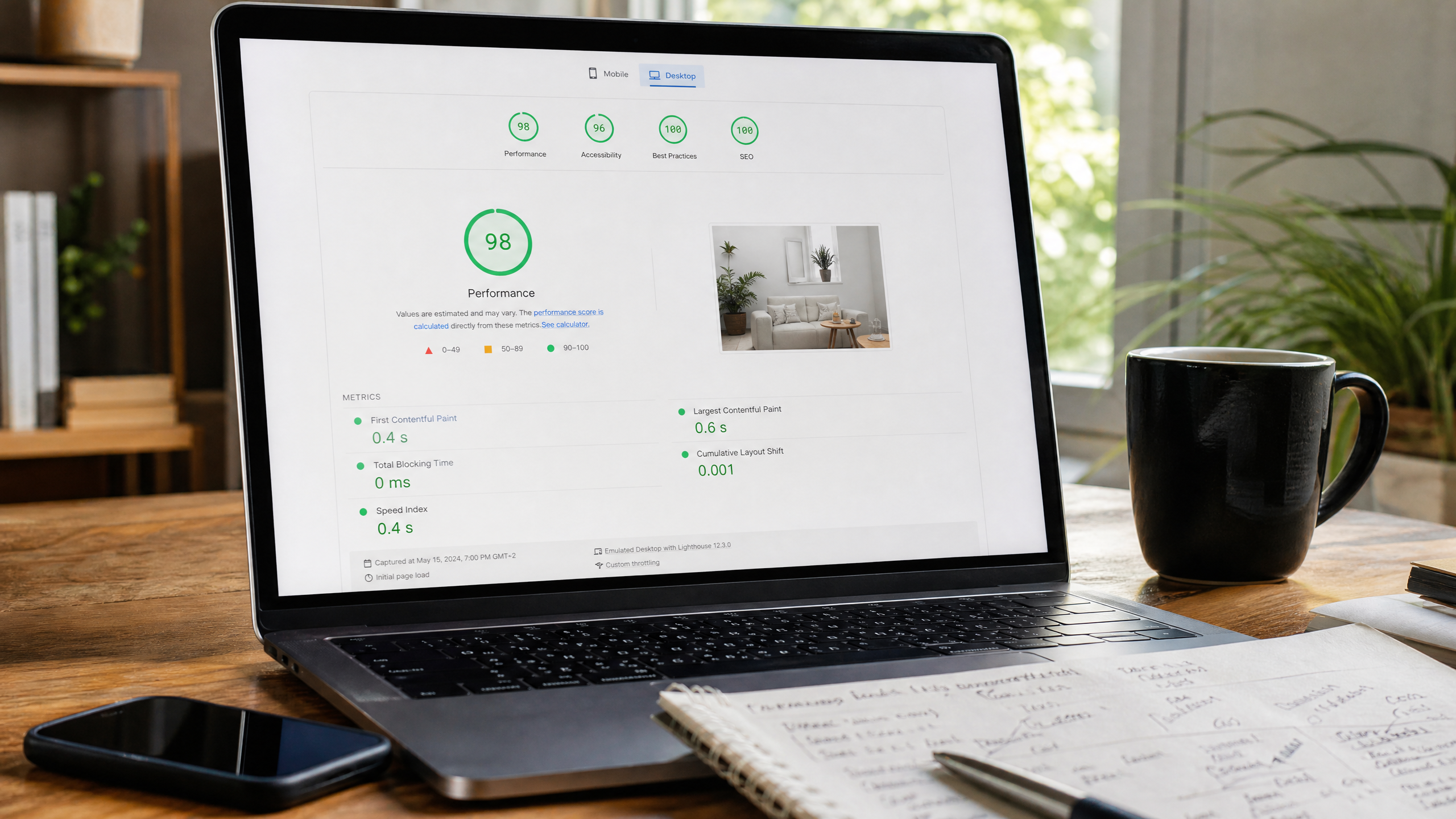
Google's Core Web Vitals measure real-world loading speed, interactivity, and visual stability. Failing these thresholds is a ranking disadvantage, particularly on mobile. Use a lightweight theme, enable caching, serve images in modern formats like WebP, and consider a CDN if your audience is geographically spread. HTTPS is non-negotiable — any site still on HTTP is sending a trust signal in the wrong direction.
DIY SEO Workflow and Content Plan (90 Days)
SEO Checklist for Small Businesses in 2026
A practical DIY SEO for small business plan doesn't require doing everything at once. Week one through three: audit existing pages, fix technical errors, and optimize your top five service pages. Weeks four through eight: build or refine location pages and publish two to three FAQ blog posts targeting questions your customers actually ask. Weeks nine through twelve: earn two to three backlinks, update your GBP, and begin a simple monthly reporting habit.
An SEO checklist for small businesses in 2026 should cover on-page optimization, local profile completeness, Core Web Vitals status, and a content publishing cadence — all tracked in a simple spreadsheet.
Editorial Calendar and Content Types
Ship your foundational pages before worrying about a blog. Once those are solid, comparison posts ("Agency vs. DIY SEO: What's Right for Your Business?") and FAQ content drive long-tail traffic with minimal word count. Repurpose each post into a short video or a GBP update. One piece of content can touch three channels with an extra hour of work — that kind of leverage matters when time is tight.
Measure, Improve, and Know When to Get Help
KPIs and Reporting Cadence
Track what connects to revenue: qualified clicks, phone calls, form submissions, and assisted conversions in GA4 and Search Console. Vanity metrics like total impressions tell an incomplete story. Review your top-performing queries monthly — this habit alone surfaces the fastest answers to how to improve SEO for small business pages that have stalled.
Iterating to Improve Rankings
Rankings plateau. When they do, the fix is usually one of three things: expanding the content to cover related subtopics, strengthening internal links pointing to that page, or earning more authoritative backlinks. Update older posts when the information drifts out of date — Google favors freshness on competitive queries.
Knowing when to outsource is its own skill. If technical issues exceed your comfort level or growth has flatlined despite consistent effort, bringing in specialist support for a defined scope is a sound investment, not a failure. Document every win and lesson along the way — that record becomes your playbook for how to do SEO for small business sustainably over the long term.